
ALL ABOUT TAR & CHIP
WHAT TAR & CHIP IS AND HOW IT’S INSTALLED
Tar & chip is a roadway and driveway paving method that combines liquid asphalt binder with clean, angular stone to create a textured pavement surface. It has been used around the world for more than a century on public roads, secondary roads, private roads and residential driveways due to its long term performance and durability.
Unlike hot mix asphalt, which is premade at an asphalt plant and delivered to the jobsite, tar & chip is constructed directly on the surface being paved, with materials being installed in sequence.
At its core, tar & chip consists of two primary components: liquid asphalt binder and stone aggregate. The binder functions as the adhesive that secures the stone, while the stone provides surface structure, traction, and appearance.
The “tar” used in modern tar & chip paving is typically a petroleum based asphalt binder or asphalt emulsion. In Virginia and much of the Mid Atlantic, this is commonly a hot applied asphalt emulsion such as CRS 2.
The stone is typically a crushed, washed, angular aggregate such as number 8 granite stone chips.
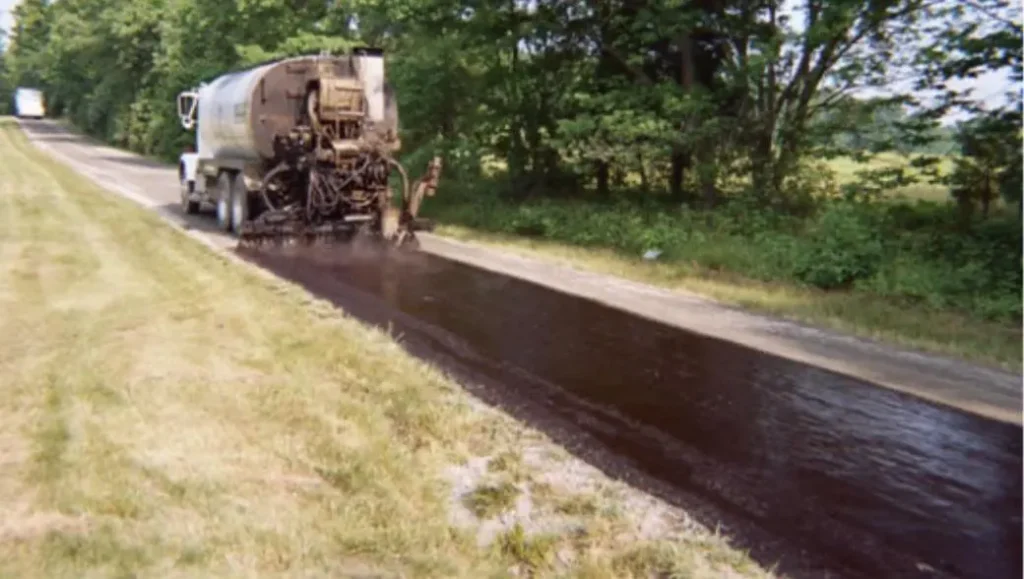
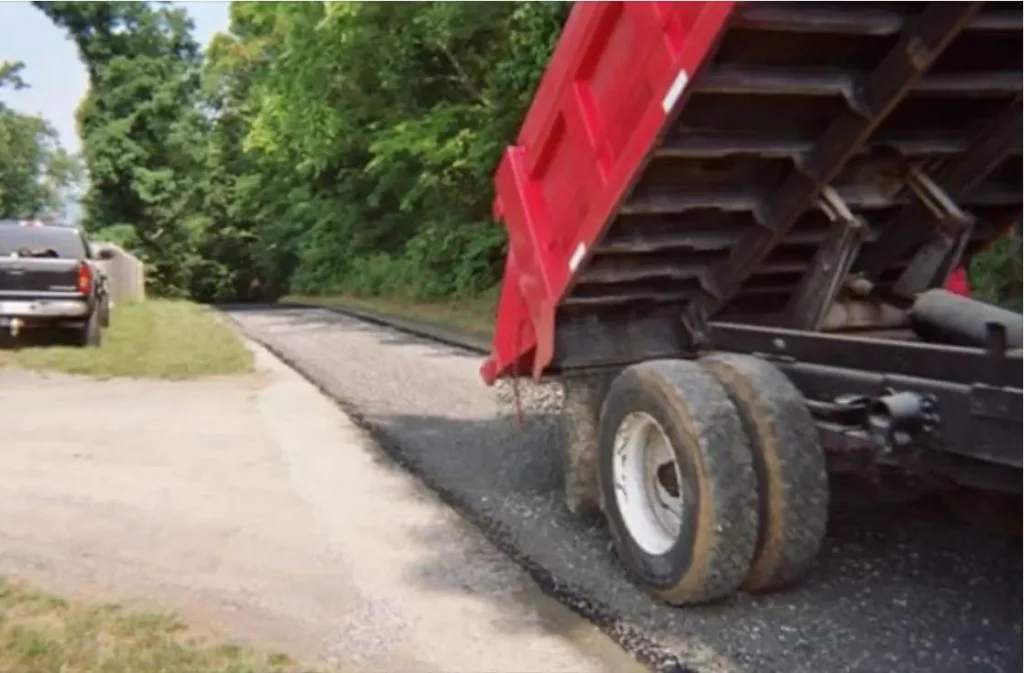
After the base has been prepared, the liquid asphalt binder is heated to the correct temperature and spray applied uniformly across the surface using a heated, insulated asphalt distributor truck. Immediately afterward, the stone is spread over the hot binder using a self propelled chip spreader or purpose built chip spreading truck. The stone is then compacted using large rollers, and its angular shape allows it to interlock and embed properly into the binder.
Over the following year after installation, normal traffic and temperature fluctuations will allow more of the loose surface stone to become seated and embedded into the surface.
SURFACE CHARACTERISTICS AND APPEARANCE
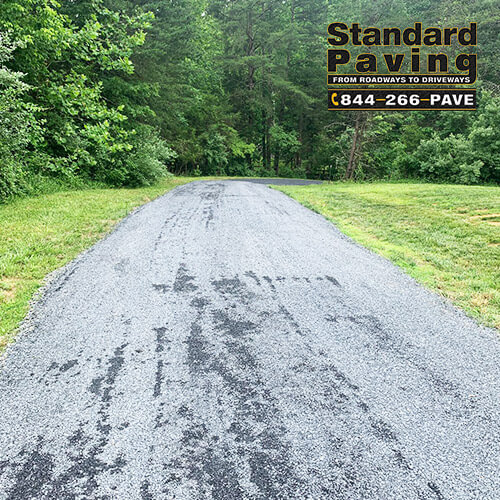
It is important to understand that tar & chip is not a hard, smooth surface like hot mix asphalt is. It is installed leaving a thin layer of loose stone across the hard paved surface beneath. The purpose of the stone is to help protect the underlying embedded stone and binder paved surface as it cures and hardens. Over time, much of this stone will also become embedded, further strengthening the surface.
Because of its exposed aggregate design, the finished appearance of tar & chip differs greatly from traditional black asphalt, with a rough stone texture and the natural color of the surface stone.
TAR & CHIP NEVER REQUIRES SEALCOATING
Unlike asphalt, which relies on surface applied Sealcoating that gradually wears away and must be reapplied, tar & chip is sealed and protected as part of the construction process
During installation, hot liquid asphalt binder is applied to the prepared base, sealing and waterproofing it. Crushed stone is then spread and compacted into the binder, becoming embedded and forming the structural surface of the pavement. After embedment, a thin layer of loose stone remains across the surface.
This stone surface—both the embedded aggregate and the loose cover stone—protects the underlying asphalt binder from UV exposure, oxidation, weathering, and traffic wear. Because the sealing binder is protected beneath the aggregate rather than exposed at the surface, it does not dry out, erode, or wear away the way a surface-applied asphalt Sealcoating does. For this reason, tar & chip surfaces do not require ongoing Sealcoating.
THE HISTORY OF TAR & CHIP AROUND THE WORLD
Chronological History of Tar and Chip Chip Seal Surface Dressing
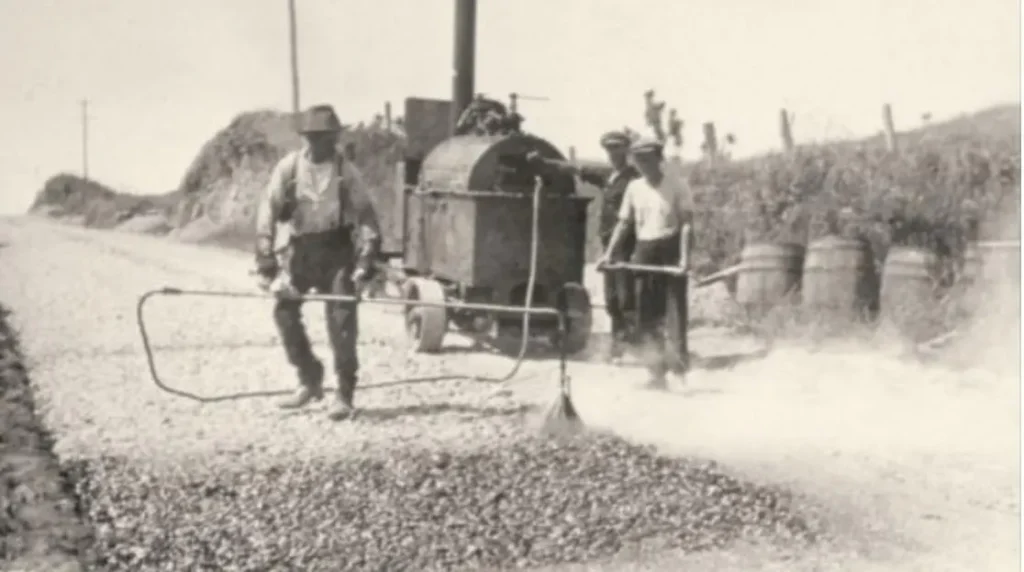
Over 900 miles of roads were built by Thomas Telford using layered broken stone construction. His contemporary, John Loudon McAdam, applied similar methods, laying the foundation for macadam road building.
Coal tar begins to be applied to macadam roads in parts of England to suppress dust and bind surface stone.
Road builders in Europe begin to experiment with spraying hot coal tar on roads and immediately covering it with stone chippings.
The term tarmacadam, later shortened to tarmac, comes into use for tar bound road surfaces, marking an important step forward as a legitimate road paving method.
Tar & chip becomes recognized as a distinct paving method and is adopted in the UK, Australia, New Zealand, and parts of Europe. U.S. road agencies begin using tar & chip on rural gravel roads.
Tar & chip use expands globally, evolving with improved binders, engineering practices, and materials.
THE HISTORY OF TAR & CHIP AROUND VIRGINIA
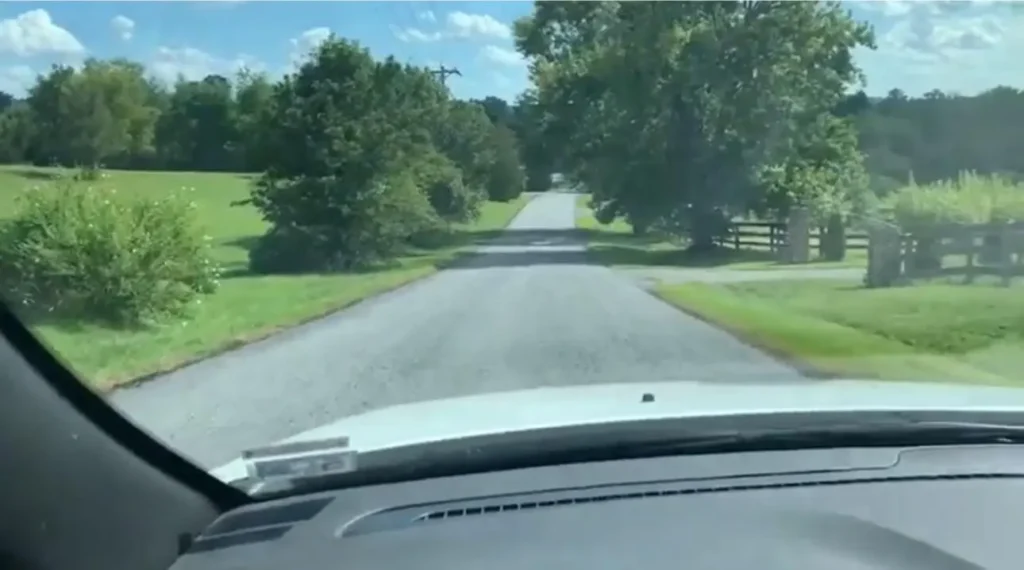
Virginia begins using tar & chip surfacing on gravel and stone roads as automobile traffic increases.
Tar & chip becomes common statewide as a practical improvement for gravel roads.
The Byrd Road Act transfers responsibility for most county roads to the Commonwealth, dramatically expanding tar & chip use.
As Virginia assumes responsibility for maintaining one of the largest state maintained secondary road systems in the United States, tar & chip becomes a primary surfacing method for public roads due to its durability and ability to be applied efficiently across large mileages.
Tar & chip is used extensively on Virginia’s public secondary roads, with thousands of miles of roadway surface treated each year as part of routine statewide road maintenance programs.
Tar & chip remains one of the most widely used public road surfacing methods in Virginia, particularly across the Commonwealth’s extensive secondary road network maintained by the state.
Virginia transitions from coal tar binders to petroleum based asphalt binders and formalizes tar & chip engineering practices, including widespread use of emulsions such as CRS 2.
Improved materials and application methods expand tar & chip use across Virginia’s extensive secondary road network.
Where Tar & Chip Is Commonly Used Across Northern Virginia & the Shenandoah Valley
Historically and today, tar & chip paving has been used on public roads, private roads, and driveways because of its durability, maintenance free nature, and value compared to hot mix asphalt.
Northern Virginia Regions Where Tar & Chip Is Commonly Used
• Clifton
• Fairfax
• Fairfax Station
• Great Falls
• McLean
• Leesburg
• Middleburg
• Purcellville
• Round Hill
• Lovettsville
• Hamilton
• Hillsboro
• Aldie
• Manassas
• Dumfries
• Occoquan
• Haymarket
• Nokesville
• Warrenton
• Marshall
• The Plains
• Bealeton
• New Baltimore
• Catlett
• Midland
• Upperville
• Culpeper
• Bealeton
• Stevensburg
• Rixeyville
• Mitchells
• Brandy Station
Shenandoah Valley Regions (I-81 Corridor) Where Tar & Chip Is Commonly Used
• Berryville
• Boyce
• White Post
• Millwood
• Winchester
• Stephens City
• Middletown
• Clear Brook
• Stephenson
• Kernstown
• Brucetown
• Cross Junction
• Gainesboro
• Star Tannery
• Woodstock
• Strasburg
• Mount Jackson
• New Market
• Edinburg
• Toms Brook
• Basye
• Orkney Springs
• Harrisonburg
• Bridgewater
• Dayton
• Broadway
• Elkton
• Mount Crawford
• Staunton
• Waynesboro
• Fishersville
• Stuarts Draft
• Verona
• Craigsville
• Buena Vista
• Glasgow
• Lexington
• Natural Bridge
• Front Royal
• Linden
• Bentonville
• Chester Gap
• Happy Creek
With more than a century of use worldwide and extensive application across Virginia, tar & chip remains a practical and proven roadway paving method.
READY TO GET STARTED ON YOUR PAVING PROJECT?
Contact Standard Paving for a professional site evaluation and a free, written estimate.
WANT TO KEEP LEARNING ABOUT THIS TOPIC?
Return to the TOPIC PAGE to continue exploring related information.

WANT TO EXPLORE A DIFFERENT TOPIC?
Return to the HOME PAGE to browse other topics and find the information you’re looking for.
WOULD YOU RATHER TALK TO A TEAM MEMBER DIRECTLY?
If you need further assistance or would like a free estimate and prefer to speak with someone in person, give us a call.