
TAR & CHIP PRIVATE ROADS
WHY TAR & CHIP PRIVATE ROADS ARE A GREAT CHOICE FOR NORTHERN VIRGINIA PROPERTY OWNERS
Private roads are one of the very first things guests see when they come for a visit. Having a beautiful new tar & chip private road installed by Standard Paving adds curb appeal to a property. Dollar for dollar, upgrading a property with a new tar & chip private road is one of the best exterior improvements Northern Virginia property owners can make.
When tar & chip private roads are installed correctly by experienced local paving contractors using the right equipment, they provide years of durability and dependable performance, while avoiding many of the maintenance challenges commonly associated with asphalt and gravel.
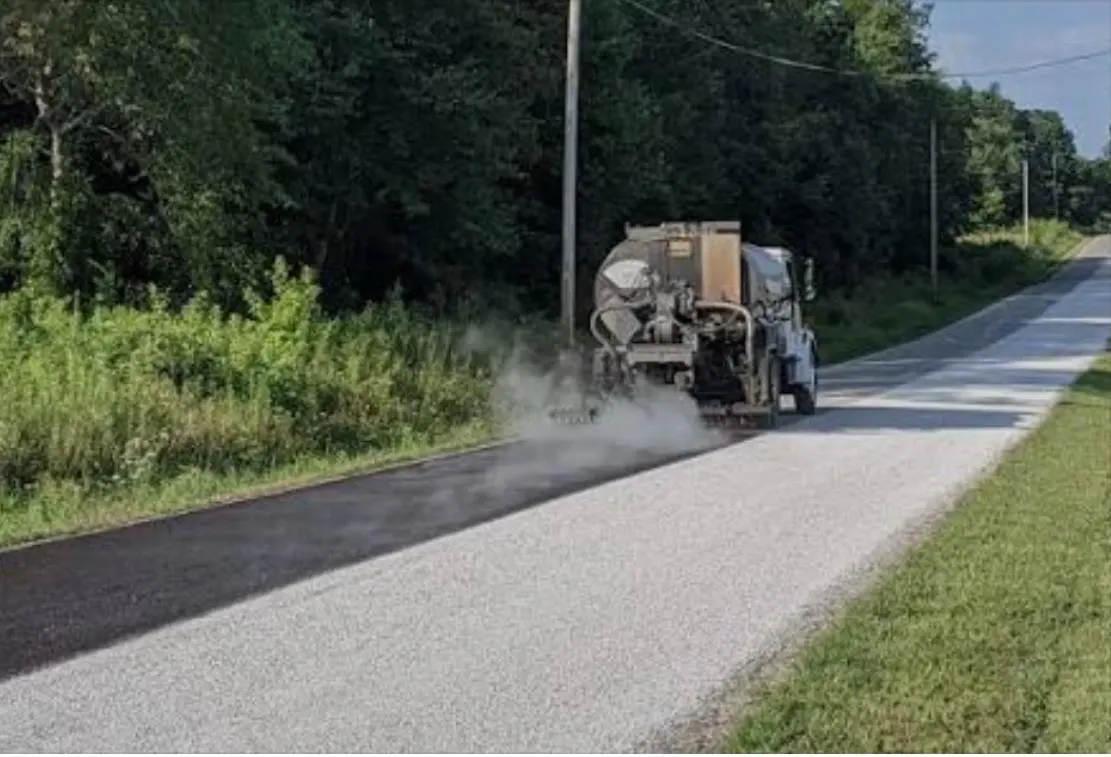
TAR & CHIP PRIVATE ROADS PROVIDE
Advantages Over Asphalt
Significantly lower total cost on larger projects
On larger private road projects, tar & chip installs significantly faster than hot-mix asphalt, reducing labor time, equipment hours, and overall project cost. Tar & chip private roads typically have a shorter service life than asphalt, averaging around 10 years compared to approximately 20 years for asphalt. While asphalt does last longer overall, tar & chip is typically installed at roughly 50% of the initial cost of asphalt and does not require recurring sealcoating or maintenance. When total installation and maintenance costs are compared over a 10-year period, tar & chip is often approximately 60% less expensive than asphalt, while avoiding ongoing upkeep, access restrictions, and coordination issues.
While asphalt does not automatically require full removal or milling down at the end of its typical 20-year service life, it quite often does. When asphalt private roads reach the point where they need to be redone, structural failure, accumulated thickness, or widespread surface deterioration can make removal or milling necessary. When this occurs, costs increase substantially, whereas tar & chip surfaces can be renewed indefinitely through resurfacing without ever requiring removal or milling, keeping long-term lifecycle costs significantly lower by comparison.
Immediate usability
Unlike asphalt, which requires extended curing time with restricted vehicle access, tar & chip can be driven on immediately after installation.
No sealcoating requirements
Asphalt is designed to be sealcoated every few years to protect the surface. Tar & chip never requires sealcoating, eliminating a major recurring maintenance requirement.
No recurring road shutdowns
Sealcoating asphalt private roads requires closing or restricting access while the sealer dries. On shared private roads, this becomes a major inconvenience and is often the reason sealcoating is delayed or never performed at all, leading to faster deterioration. Tar & chip eliminates this issue entirely.
No logistical coordination issues on shared roads
Coordinating sealcoating schedules among multiple homeowners is difficult. Tar & chip avoids access restrictions and coordination problems common with asphalt private road maintenance.
Superior traction, especially in wet conditions
The textured stone surface provides significantly better traction than smooth asphalt, particularly on hills, curves, and during rain or freezing conditions.
Stronger, longer-lasting repairs
Asphalt repairs commonly crack along seams within a year, allowing water intrusion. Tar & chip remains pliable and bonds to existing material without rigid seams, resulting in repairs that resist cracking and last longer.
Easier and less expensive repairs
Asphalt repairs typically require mobilizing nearly the same crew size and paving equipment as initial installation. Tar & chip repairs can often be completed by one or two people with minimal equipment. In many cases, professional-quality repairs can even be performed by property owners using basic tools and materials readily available from a home improvement store.
Repairs that blend naturally
Asphalt patches are visually obvious due to color and texture differences. Tar & chip repairs use the same stone as the original surface, allowing repaired areas to blend quickly as traffic seats the aggregate.
Forgiving edges with no backfilling required
Tar & chip edges are not elevated above surrounding ground like asphalt edges. Vehicles can drive on and off the surface without damaging edges, and no edge backfilling is required.
An indefinitely renewable paving system
Asphalt eventually must be completely removed due to structural failure or accumulated thickness. Tar & chip is a thin, flexible surface that can be maintained indefinitely through localized repairs and periodic resurfacing without milling or removal.
Far greater resistance to cracking
Tar & chip’s flexible binder system absorbs movement instead of cracking. This makes it far more resistant to general cracking and reflective cracking than rigid asphalt surfaces, especially when applied over older or distressed pavement.
Lower surface temperatures and reduced glare
Black asphalt absorbs heat and can reach surface temperatures of approximately 150–165°F on hot summer days, radiating heat and increasing glare. Tar & chip’s lighter stone surface absorbs less heat and has a matte finish that reduces glare, making it a noticeably cooler paving surface.
A more natural appearance
Many property owners prefer the stone texture and lighter appearance of tar & chip over black asphalt, especially on estate properties, farms, and rural settings.
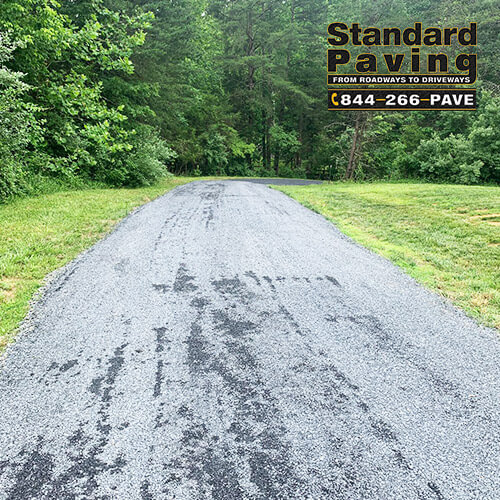
ADVANTAGES OVER GRAVEL
A stable paved surface
Unlike gravel, tar & chip creates a bound surface that does not shift, rut, or migrate under normal vehicle traffic.
Dust-free in dry conditions
Gravel generates airborne dust that can be irritating for people with allergies or sensitive airways, while also coating vehicles and home exteriors. Tar & chip uses clean, washed stone bound with asphalt, eliminating dust.
Mud-free in wet conditions
Gravel contains fines that turn soft and muddy when it rains, creating a messy surface that easily tracks into homes, vehicles, and garages. Tar & chip is made with clean, washed stone bound in asphalt, so there are no fines to turn into mud. Even in wet weather, the surface remains clean.
Strong resistance to washouts
Gravel commonly washes out during heavy rain. Beneath the loose stone surface layer, tar & chip is a hard paved surface that does not develop ruts or washouts.
Easier snow removal
Gravel is a loose stone material, and snow plows frequently dig into it, displacing material, creating a mess, and destroying the established road grade. Beneath tar & chip’s thin surface stone layer is a hard, solid paved surface, so it can be plowed cleanly without damaging the surface.
Better traction on slopes and grades
Tar & chip’s embedded stone, hard-paved surface provides significantly better grip than loose gravel and eliminates tire spin. This improved traction is especially important for safety on hills and when exiting into traffic, where tire-spin delay can cause mistiming and create a safety risk.
Much lower ongoing maintenance
Gravel requires constant regrading, stone replacement, filling in pot holes, ruts and weed control. Tar & chip eliminates these recurring maintenance issues.
Smoother driving surface
Gravel driveways are typically surfaced with 21-A or #57 stone containing rocks up to ¾ inch in size. Tar & chip is surfaced with smaller, typically ⅜-inch stone, creating a noticeably smoother and more refined driving surface.
Maintains a natural stone look
Tar & chip delivers the carefree durability of a clean paved surface while preserving the appearance of a high-end well manicured stone road.
READY TO GET STARTED ON YOUR PAVING PROJECT?
Contact Standard Paving for a professional site evaluation and a free, written estimate.
WANT TO KEEP LEARNING ABOUT THIS TOPIC?
Return to the TOPIC PAGE to continue exploring related information.

WANT TO EXPLORE A DIFFERENT TOPIC?
Return to the HOME PAGE to browse other topics and find the information you’re looking for.
WOULD YOU RATHER TALK TO A TEAM MEMBER DIRECTLY?
If you need further assistance or would like a free estimate and prefer to speak with someone in person, give us a call.